Columbia Falls, MT
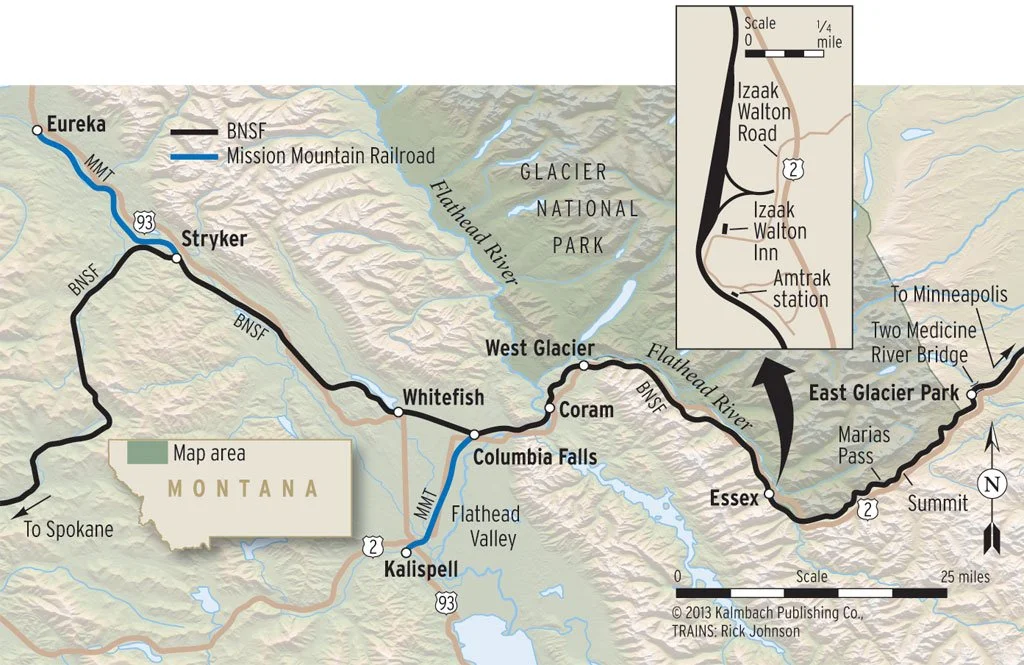
Columbia Falls is a small town in northwest Montana just a short distance north of Flathead Lake and close to Glacier National Park. It developed as a railroad town, like many of the other towns in the valley. Many new settlers came to the area looking for mineral riches like gold and silver, but found something better—a beautiful place to stay and grow their families. The influx of people resulted in an increased need for housing, and the railroad helped to deliver it. This new kind of housing molded well to the new way of life people were looking to start in this area, and became the basis for the development of the surrounding community.
Mining Settlements and the Introduction of the Railroad
Before white settlers began the journey into Montana, it was home to the Bitterroot Salish, Upper Pend d’Oreille, and Kootenai peoples, today known as the Confederated Salish and Kootenai Tribes. However, the “gold fever” that began in California in 1848 soon spread to surrounding areas, and white settlers from all over the United States began the search for riches in Montana in the 1860s. The discovery of gold, silver, and copper in Montana drew in a frenzy of new settlers, eventually leading to the creation of the Montana Territory in May of 1864.
Initial settlement of the Flathead Valley, however, took a bit longer as the terrain was difficult to manage. James J. Hill’s railroad, up until 1887, ran from St. Paul, Minnesota, to just west of Havre, Montana, and had branches out through Great Falls to Helena. In 1889, Hill desired to run his railroad out to Washington, and chose Marias Pass to span over the Rocky Mountains. This pass runs along what is now the southern border of Glacier National Park, and through the towns of the Upper Flathead Valley, including Columbia Falls, Kalispell, and Whitefish. The development of this Great Northern Railroad promised industry, and settlers of nearby areas were looking for new ways to make a living in Montana after the mineral riches had fizzled out. The early 1880s show records of settlers and homesteaders in what was then the Half Moon Prairie, Bad Rock Canyon, and Monaco, where on July 1, 1891 the post office was renamed “Columbia Falls.”
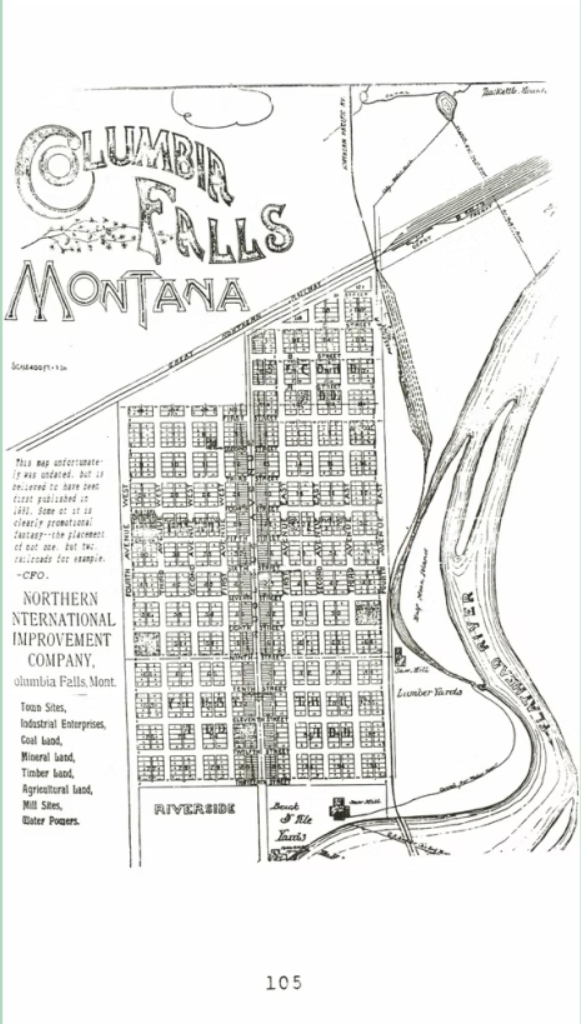
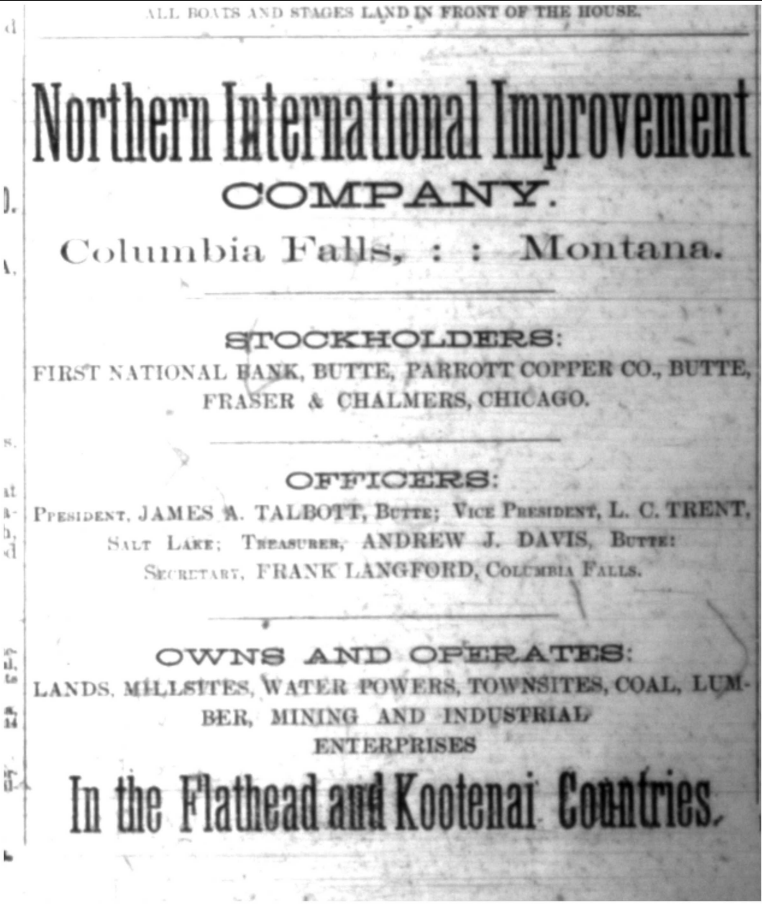
With the installation of the Great Northern Railroad, the area around Columbia Falls grew rife with new industry—first timber and then coal mining. This led to the formation of the Northern International Improvement Company in 1891 (also known as the Northern International Development Company) by figures who would later be known as the founders of Columbia Falls. The company bought up land just west of Bad Rock Canyon and filed a plat for the new townsite of Columbia Falls on March 5, 1891.
Many new settlers flocked to this area with the hope of starting a new and better life for themselves. According to census data, people came to Columbia Falls from many different places. Not only were settlers coming from other states, such as New York, Ohio, and Illinois, but they were also coming from different countries, like nearby Canada and some even as far away as Norway and Germany.
Railroad Towns
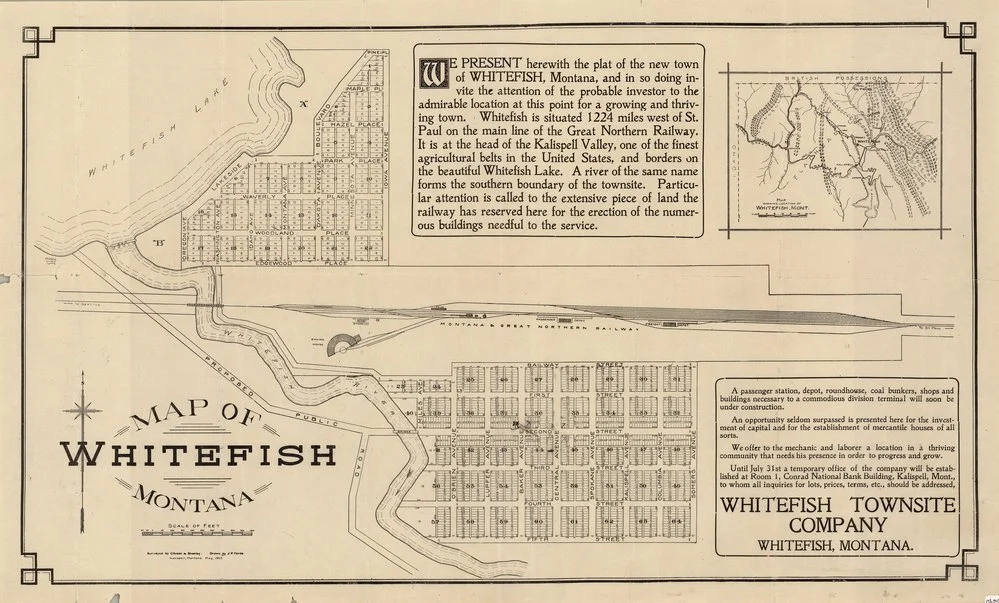
Like in the nearby towns of Whitefish and Demersville (what is now Kalispell), the town was laid out around the railroad and a singular main street, “Nucleus Avenue.” This main street became the downtown commercial district, and the side streets branching off it contained residential lots. This layout has stayed relatively the same as it was when it was first laid out, with later additions to the town happening on the outskirts. Railroad towns were typically laid out in a similar fashion, as workers needed to stop and refuel at each stop. Towns were usually within seven to ten miles of each other, since that was approximately how far a steam engine could go without needing to refuel with water. Railroad companies, much like the Northern International improvement company, often owned much of the land surrounding the railroad. In this way, they were able to control how the town was laid out, how many lots there were and who they were sold to, and the town’s economy overall.
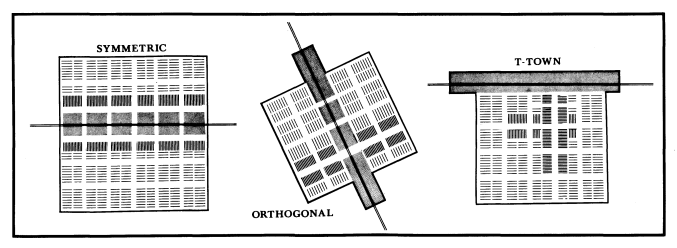
Railway towns tended to be designed in grids; this made the layout simple and easier for the railroad companies to control. Most towns, like Columbia Falls, were distinguishable as railroad towns by lot size and layouts. Over time, these townsite plats developed into slightly different variations, as railroad companies began to learn what worked well for them and what did not. In the beginning, towns were designed with the railroad running straight through the center of town in a symmetrical layout, with half of the town on one side of the tracks and the second half on the other. This layout put a row of businesses on either side of the tracks, with residential neighborhoods spanning out behind them. However, being “on the other side of the tracks” created contention between businesses, and so the “T-Town” layout was developed in the later nineteenth century. This layout placed the main street perpendicular to the train tracks, with space in between for yard work, material storage, or other functions directly related to the railroad. While the main street is not exactly perpendicular to the railroad, the “T-Town” layout was used in the development of the Columbia Falls townsite, and is currently still visible in aerial views of the town.
Residential Architecture in Railroad Towns
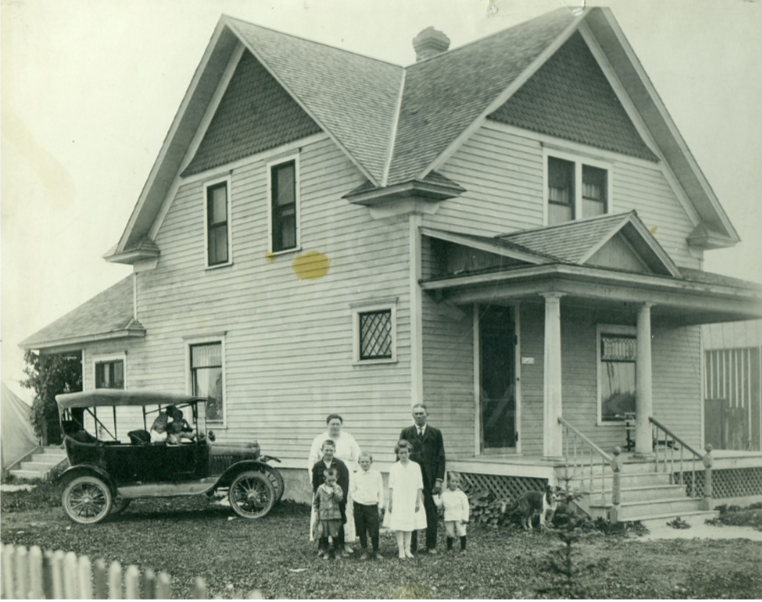
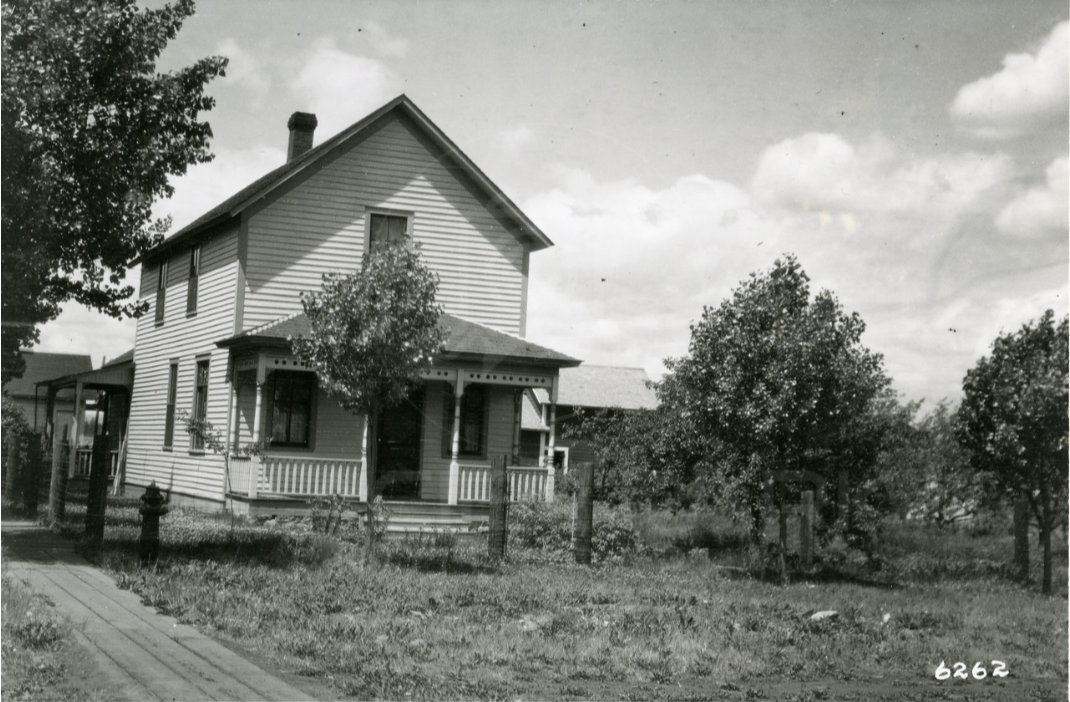
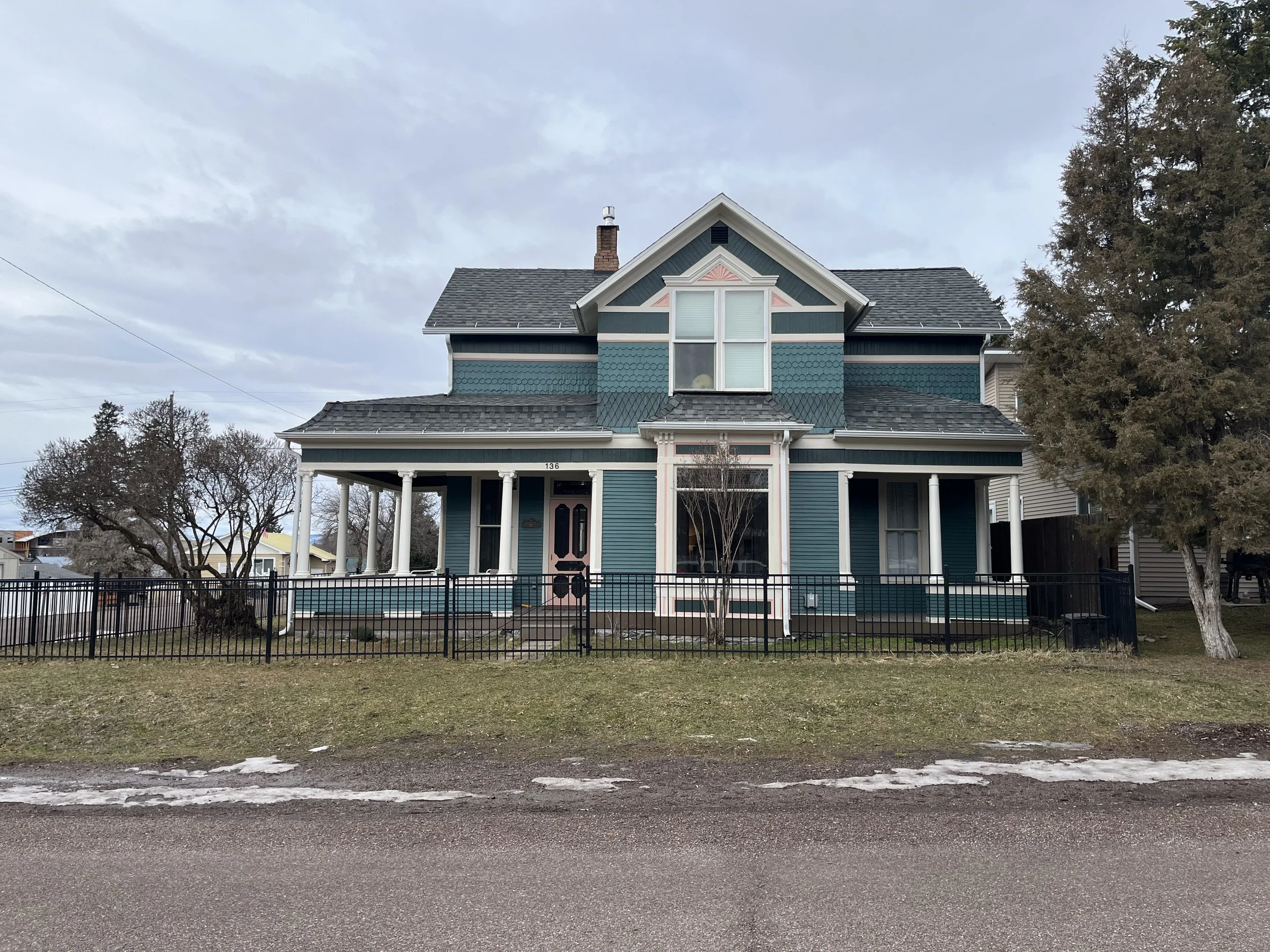
Adjacent to the downtown commercial district and within the residential neighborhood of Columbia Falls, many new settlers were beginning to construct their new homes. Because of its simple, efficient yet elegant look, many of the original homes in Columbia Falls were built in the then-popular Folk Victorian style. The Folk Victorian style is known to be a slightly simpler version of the Queen Anne style, with fewer ornaments and simpler plan layouts. It was popular from the 1880s to around 1910, about a year after Columbia Falls was incorporated as a town in Montana in 1909. The development of the railroad helped to bring this architectural style to more rural areas such as Columbia Falls. Much of the Folk Victorian ornamentation is produced with specific tools and heavy woodworking machinery, and the railroad helped to transport these items across the United States, leading to the popularization of this style, a lower cost to build, and its ease of construction. The Reid Mansion, designed and built by Henry A. Miller in 1891, illustrates the qualities of this style well. The use of scalloped and diamond-shaped shingles on the second story contrast with the basic lap siding on the ground floor. Smaller details, like the ornamental pieces above the gable windows and the porch columns, allude to use of the more detailed Queen Anne style as a muse for this more rural version.
Resources & More Ways to Explore